About Me
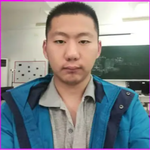
Samuel is a robotics software engineer exploring how chatbot technologies can support intelligent robot control. His research interests span agent systems, latent world models, and deep reinforcement learning. Samuel has developed numerous robots and chatbots, yet he continues to explore the elusive concept of endowing robots with what can be described as a “soul.”
- Cognitive Robotics
- Agent Systems for Robotics
- Latent World Models
- Deep Reinforcement Learning
- Robotic Systems and Middleware
MEng Computer Technology
Central China Normal University
MSc Computer Science
University of Wollongong
BSc Computer Science and Technology
Huaiyin Institute of Technology
My research focuses on how robots organize available information, reason about their situations, and decide how to act.
- Cognitive Skill Templates
I explore how symbolic abstraction and structured, tagged text can guide language models to perform cognitive operations such as task decomposition, action selection, and self-reflection. I aim to organize these operations into reusable skill templates that support reasoning over scene context and learning from interaction feedback.
- Agent Systems for Robotics
I investigate how language models, memory, and cognitive skill templates can be integrated into robotic agent systems. This direction explores single-agent workflows and multi-agent collaboration for coordinating robot actions, monitoring execution, and revising plans in response to environmental feedback.
- Latent World Models
I aim to develop generative latent world models that capture environmental dynamics conditioned on robot actions. By combining these models with Monte Carlo methods for exploration and evaluation, I aim to simulate possible futures and assess candidate actions, helping robots plan ahead, make informed decisions under uncertainty, and adapt to complex environments.